Roti Canai Recipe
Introduction
Roti Canai is a flaky, crispy flatbread popular in Malaysia and Singapore, perfect for dipping in curry or enjoying with sweet toppings. This recipe guides you through making tender, layered roti at home, delivering authentic flavors with simple ingredients.

Ingredients
- 500 g all purpose flour (about 4 cups, spoon and level method)
- 1 tsp sea salt
- 180 mL boiling water (¾ cup)
- 180 mL room temperature water (¾ cup)
- Oil (for coating, layering, and cooking)
- Butter or ghee (optional)
Instructions
- Step 1: About 10 hours before cooking (or at least 3 hours), mix the flour and salt in a large bowl.
- Step 2: While stirring with a fork or spatula, gradually add boiling water to form clumps, then stir until water is dispersed.
- Step 3: Add room temperature water while mixing (preferably by hand) until a soft, scraggly dough forms that is not sticky.
- Step 4: Cover the bowl with plastic wrap and let the dough rest for 30 minutes to 1 hour to develop gluten.
- Step 5: Knead the dough for 2–3 minutes until smooth and satiny. Knead longer if needed.
- Step 6: Divide the dough into 8 equal portions (90–100 g each), shape into smooth balls, coat in oil, and place on an oiled plate with space between them.
- Step 7: Cover and rest the dough balls for at least 2 hours or up to 12 hours for better pliability.
- Step 8: To shape, flatten a dough ball on a smooth surface and stretch it thinly until nearly transparent without tearing.
- Step 9: Lightly spread oil, butter, or ghee on the stretched dough surface.
- Step 10: Roll the dough into a tight log, then coil it into a spiral, tucking ends underneath and pressing to seal.
- Step 11: Place the coiled dough back on the oiled plate, cover, and rest for another hour.
- Step 12: Heat an 8-inch non-stick pan over medium heat. Flatten one coil into a 6–7 inch round using hands.
- Step 13: Add a few drops of oil to the pan, cook the roti until golden brown on one side, flip and cook the other side similarly, about 4 minutes total, flipping often for even browning.
- Step 14: Place cooked roti on a rack to cool slightly and maintain crispness before serving.
Tips & Variations
- For extra richness and flavor, use ghee or butter instead of vegetable oil when layering the dough.
- If your dough tears while stretching, let it rest longer to relax the gluten and try again gently.
- Serve with dhal curry or sugar for a traditional experience, or try the roti with your favorite savory dips.
Storage
Store any leftover cooked roti in an airtight container in the refrigerator for up to 2 days. Reheat on a hot skillet over medium heat to restore crispness. You can also freeze uncooked dough coils wrapped tightly and thaw before shaping and cooking.
How to Serve
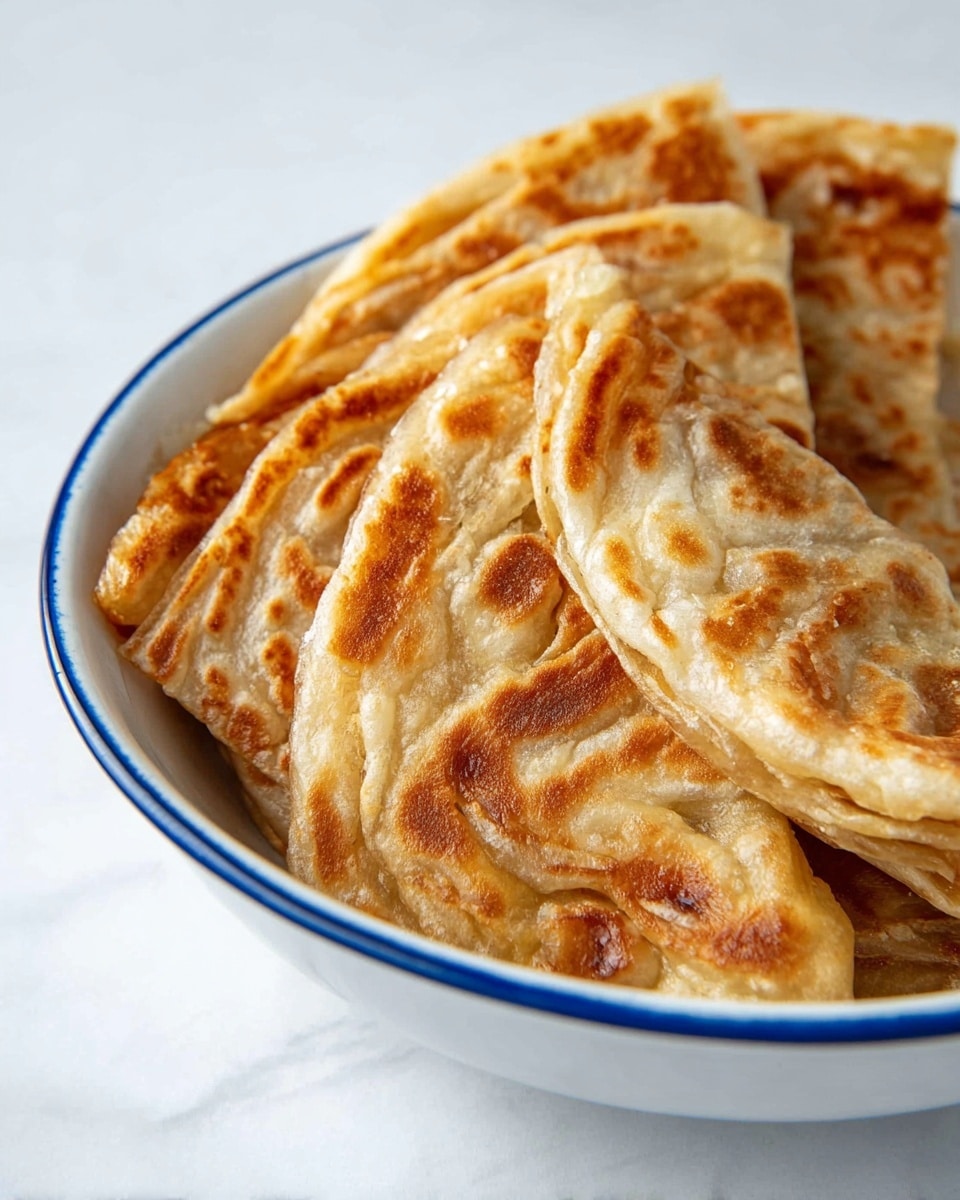
Serve this delicious recipe with your favorite sides.
FAQs
Can I use warm water instead of boiling water?
Boiling water helps to partially cook the flour and makes the dough more pliable, which is key to the flakiness of roti canai. Using warm water instead may result in a less tender dough.
What oil is best for coating and cooking roti?
Vegetable oil is commonly used for coating and cooking due to its neutral flavor and high smoke point. For richer taste, you can use ghee or butter during layering and cooking.
PrintRoti Canai Recipe

Roti Canai is a traditional Malaysian flatbread known for its flaky, crispy layers and soft interior. This recipe guides you through the process of making the dough from scratch, resting it for optimal gluten development, then shaping, layering with oil or ghee, and pan-frying to achieve a golden brown perfection. Perfect for breakfast or as an accompaniment to savory curries and stews.
- Prep Time: 15 minutes (plus resting time: 3 to 12 hours)
- Cook Time: 4 minutes per roti
- Total Time: 3 hours 15 minutes to 12 hours 15 minutes (including all resting times)
- Yield: 8 roti canai 1x
- Category: Bread
- Method: Frying
- Cuisine: Malaysian
Ingredients
Dry Ingredients
- 500 g all purpose flour (about 4 cups, spoon and level method)
- 1 tsp sea salt
Wet Ingredients
- 180 mL boiling water (¾ cup)
- 180 mL room temperature water (¾ cup)
Others
- Vegetable oil (for coating, layering, and cooking)
- Butter or ghee (optional, for layering and cooking)
Instructions
- Prepare Dough: About 10 hours before cooking (or at least 3 hours ahead), place flour and salt in a large bowl and combine. While stirring with a fork or spatula, add boiling water gradually to form clumps, then add room temperature water while mixing with hands until a soft, non-sticky, scraggly dough forms.
- Rest Dough: Cover dough with plastic wrap and let it rest for 30 minutes to 1 hour for gluten development.
- Knead Dough: Knead the rested dough for 2-3 minutes until surface is smooth and satiny. Divide into 8 equal portions (90-100 g each) and shape each into smooth balls. Coat balls lightly with oil, place on a greased plate ensuring spacing to prevent sticking, cover and let rest for 2 to 12 hours (overnight preferred).
- Shape Roti: Place oil or butter/ghee in a bowl. Flatten one dough ball on a smooth surface and stretch it evenly with hands until paper-thin and translucent. Spread a thin layer of oil or ghee on top.
- Roll and Coil: Roll the dough into a tight tube, then coil into a spiral and tuck ends under. Press down to seal, place on oiled plate and repeat for remaining dough balls. Cover and rest the shaped dough for at least one more hour.
- Pan-Fry: Heat a non-stick or tawa pan over medium heat. Flatten one coiled dough into a 6-7 inch circle using hands or a rolling pin. Brush the pan with oil, place the roti in the pan, and cook for about 4 minutes total, flipping frequently to ensure even golden browning on both sides.
- Serve: Transfer cooked roti to a cooling rack. Serve warm, optionally with curries, dhal, or sugar for dipping.
Notes
- Resting the dough overnight greatly improves texture and pliability due to gluten development.
- Stretching the dough thinly without tearing takes practice; if dough tears, gently pinch it back together and continue stretching.
- Adjust the pan heat as needed to avoid burning while ensuring even cooking.
- Butter or ghee adds richness and crispiness but can be omitted for a lighter version.
- Use a non-stick pan or a well-seasoned tawa for best results.
Keywords: Roti Canai, Malaysian flatbread, flaky roti, homemade bread, pan-fried flatbread, curry bread, traditional Malaysian recipe