Okonomiyaki (Japanese Cabbage Pancakes) Recipe
Introduction
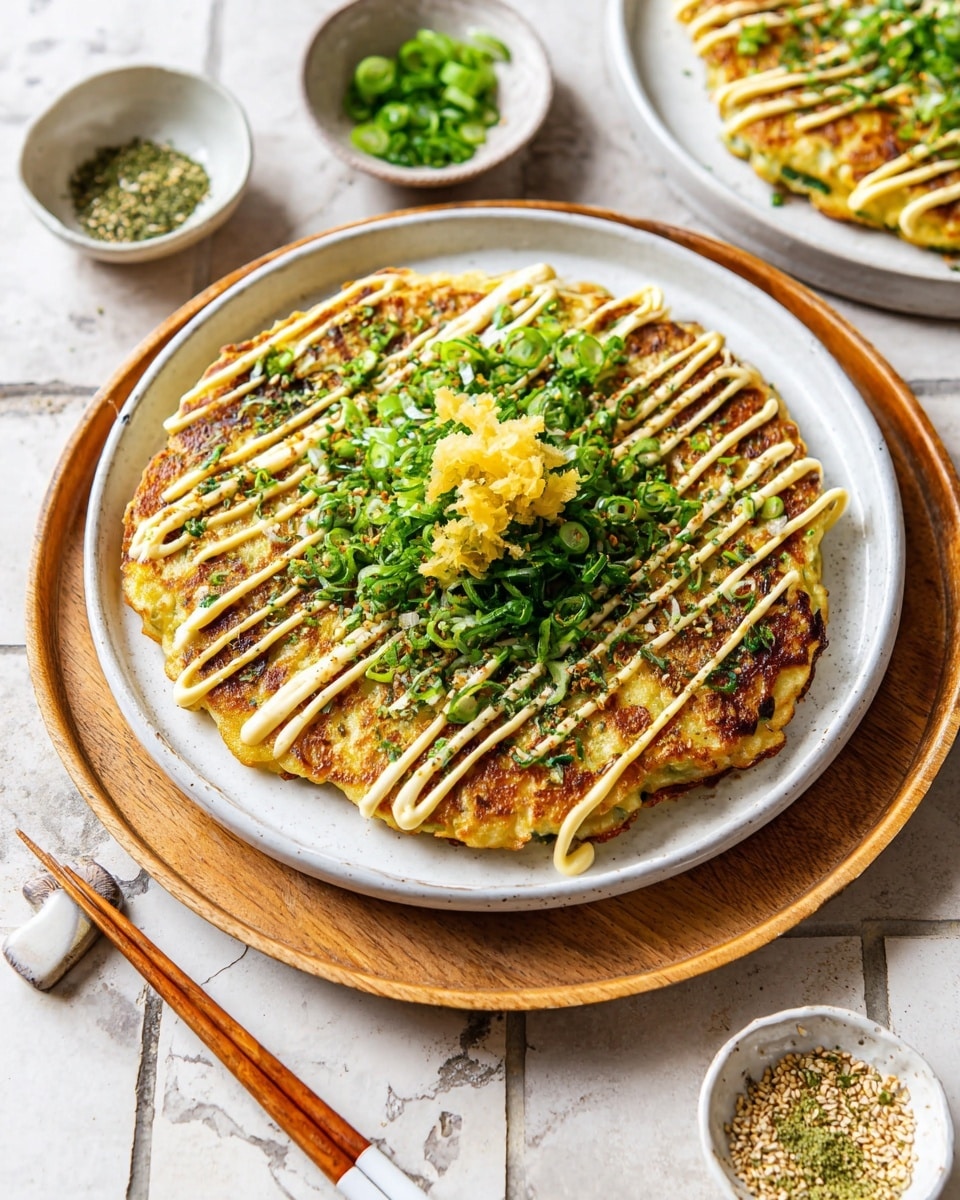
Okonomiyaki is a savory Japanese cabbage pancake that’s both delicious and versatile. Packed with fresh vegetables and flavored with soy and sesame, it’s perfect for a satisfying meal any time of day.
Ingredients
- 2 cups finely shredded cabbage
- 1 large carrot, grated
- 1 small yellow onion, thinly sliced
- 1 teaspoon fine-grain salt
- 4 large eggs
- 2 teaspoons light soy sauce
- 1 teaspoon toasted sesame oil
- 1/4 cup all-purpose flour
- Oil for frying (neutral-flavored and some toasted sesame oil for flavor)
- Japanese mayonnaise (for serving)
- Toppings of choice: toasted sesame seeds, pickled ginger, sliced scallions, cilantro
Instructions
- Step 1: Place the shredded cabbage, grated carrot, and sliced onion into a colander or mesh strainer. Sprinkle with salt, toss to combine, and let it sit while you prepare the batter to draw out excess moisture.
- Step 2: In a large bowl, whisk together the eggs, soy sauce, toasted sesame oil, and all-purpose flour until you have a smooth batter.
- Step 3: Add the salted vegetables into the batter and stir well to combine.
- Step 4: Heat a large, heavy-bottomed skillet over medium-high heat. Add a tablespoon of neutral-flavored cooking oil along with a teaspoon of toasted sesame oil for extra flavor.
- Step 5: To make one large okonomiyaki, pour all the batter into the skillet. Use a spatula to smooth the top evenly. Cook for about 5 minutes until the bottom is golden brown.
- Step 6: Carefully lift one side to check doneness. If ready, slide the pancake onto a large plate, invert the skillet over it, and flip the pancake back into the skillet to cook the other side for another 5 minutes.
- Step 7: Once cooked, slide the pancake onto a cutting board and let it rest for a minute before slicing into wedges.
- Step 8: Alternatively, to make two medium pancakes, divide the batter in half and repeat the cooking process twice.
- Step 9: For mini okonomiyaki, drop 1/4 cup scoops of batter into the hot oil. Cook until golden brown on one side, then flip and cook for an additional 2-3 minutes until done.
Tips & Variations
- Be sure to salt and drain the cabbage and vegetables well to avoid soggy pancakes.
- Try adding protein like shrimp, bacon, or sliced pork belly into the batter for a heartier meal.
- Use Japanese mayonnaise and a drizzle of okonomiyaki sauce for an authentic topping experience.
- Feel free to mix in other shredded vegetables like zucchini or bean sprouts for extra texture.
Storage
Store leftover okonomiyaki in an airtight container in the refrigerator for up to 2 days. Reheat gently in a skillet over medium heat to keep the exterior crisp, or microwave briefly if preferred, though the texture will be softer.
How to Serve
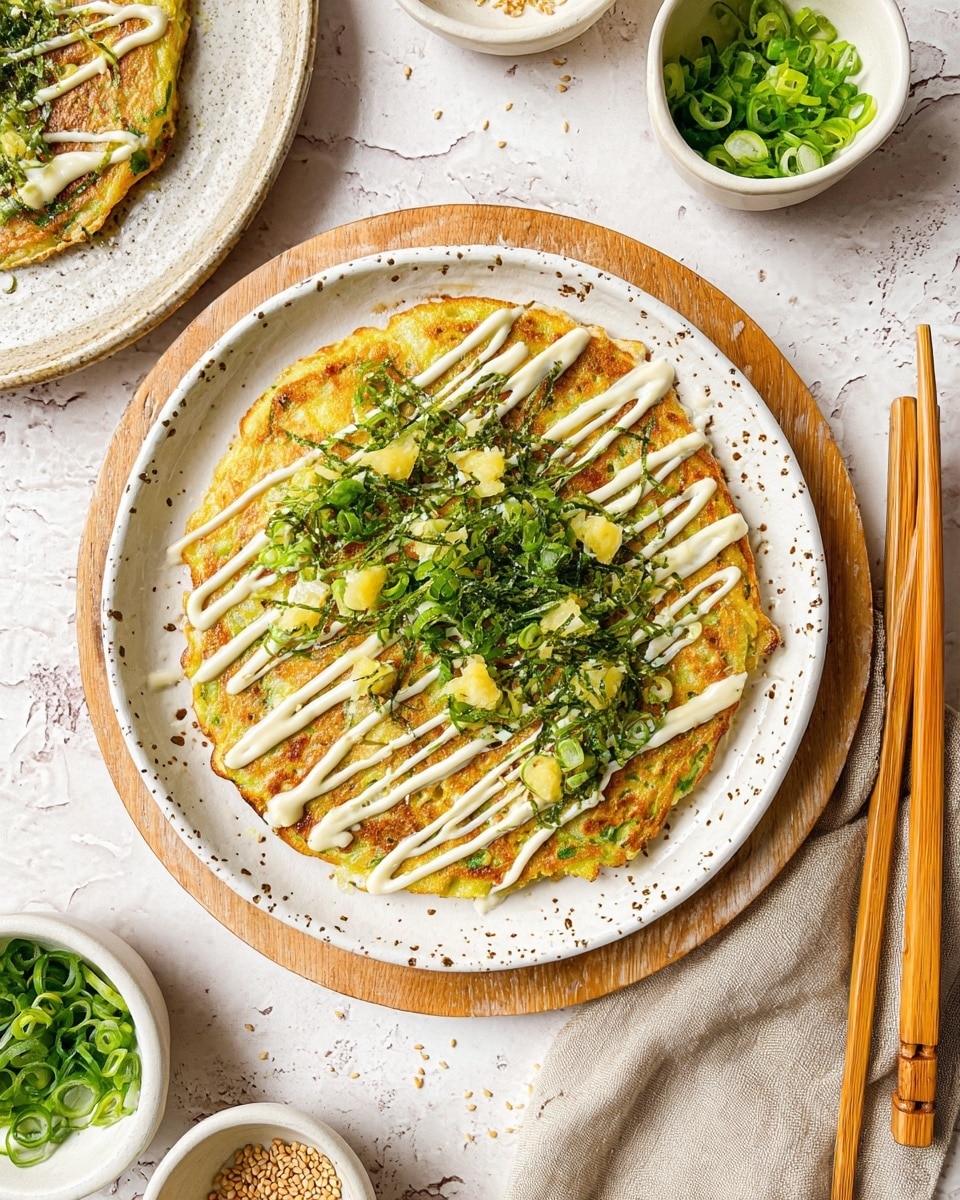
Serve this delicious recipe with your favorite sides.
FAQs
Can I make okonomiyaki gluten-free?
Yes, substitute the all-purpose flour with a gluten-free flour blend or rice flour to make a gluten-free version.
What is the best way to serve okonomiyaki?
Serve warm with Japanese mayonnaise and your favorite toppings like pickled ginger, scallions, and toasted sesame seeds for a delicious finish.
PrintOkonomiyaki (Japanese Cabbage Pancakes) Recipe

Okonomiyaki is a savory Japanese cabbage pancake that combines shredded cabbage, grated carrot, and thinly sliced onion with a simple batter of eggs, soy sauce, and flour. This versatile dish is pan-fried to golden perfection and served with Japanese mayonnaise and various toppings such as toasted sesame seeds, pickled ginger, sliced scallions, and cilantro. Perfect as a satisfying appetizer or main dish, this recipe offers flexible serving sizes – from one large pancake to several smaller ones – catering to all appetites.
- Prep Time: 15 minutes
- Cook Time: 15 minutes
- Total Time: 30 minutes
- Yield: 4 servings (1 large or 2 medium or several mini pancakes) 1x
- Category: Main Dish
- Method: Frying
- Cuisine: Japanese
- Diet: Vegetarian
Ingredients
Vegetables
- 2 cups finely shredded cabbage
- 1 large carrot, grated
- 1 small yellow onion, thinly sliced
Batter
- 1 teaspoon fine-grain salt
- 4 large eggs
- 2 teaspoons light soy sauce
- 1 teaspoon toasted sesame oil
- 1/4 cup all-purpose flour
Cooking
- Oil for frying (neutral-flavoured cooking oil plus toasted sesame oil)
For Serving
- Japanese mayonnaise
- Toppings of choice: toasted sesame seeds, pickled ginger, sliced scallions, cilantro
Instructions
- Strain Vegetables: Place the shredded cabbage, grated carrot, and thinly sliced onion into a colander or mesh strainer and sprinkle with the salt. Toss well to combine and let the mixture sit while you prepare the batter. This helps to soften the vegetables and release excess moisture.
- Whisk Batter: In a large bowl, combine the eggs, light soy sauce, toasted sesame oil, and all-purpose flour. Whisk these ingredients together until you achieve a smooth, uniform batter without lumps.
- Mix Vegetables and Batter: Add the salted cabbage, carrot, and onion mixture to the batter. Stir gently but thoroughly to evenly coat all the vegetables with the batter.
- Heat Skillet: Place a large, heavy-bottomed skillet over medium-high heat. Add a tablespoon of a neutral-flavoured cooking oil along with a teaspoon of toasted sesame oil for flavor.
- Cook Large Okonomiyaki: For one large pancake, pour the entire batter mixture into the hot skillet. Use a spatula to spread and smooth out the batter evenly. Cook for about 5 minutes, then carefully lift one side to check if the bottom is golden brown. When ready, invert the skillet over a large plate and flip the pancake onto the plate, then slide it back into the skillet to cook the other side for about 5 more minutes. Let it rest for 1 minute before cutting into wedges to serve.
- Cook Medium Okonomiyaki: For two medium-sized pancakes, divide the batter in half and cook each portion using the same method described for one large okonomiyaki. Cook the first half fully, then repeat with the second half.
- Cook Mini Okonomiyaki: To make smaller pancakes, drop 1/4 cup scoops of batter into the hot oil. Fry each mini pancake until the bottom is golden brown, then flip and cook the other side for an additional 2–3 minutes until cooked through.
- Serve: Serve the okonomiyaki warm topped with Japanese mayonnaise and your choice of toppings such as toasted sesame seeds, pickled ginger, sliced scallions, and cilantro for extra flavor and texture.
Notes
- Using a colander to strain the vegetables with salt helps reduce excess moisture, preventing soggy pancakes.
- A neutral-flavored oil such as vegetable or canola works well for frying; the toasted sesame oil adds a pleasant nutty flavor.
- Adjust the cooking time slightly depending on pancake size and your stove to ensure pancakes are cooked through but not burnt.
- Okonomiyaki is very versatile—you can experiment with adding proteins like shrimp, bacon, or pork belly.
- Leftovers can be refrigerated and reheated in a skillet or oven for best texture retention.
Keywords: Okonomiyaki, Japanese cabbage pancakes, savory pancakes, Japanese street food, pan-fried pancakes, cabbage recipe