
Croissant Bread Loaf Recipe
Introduction
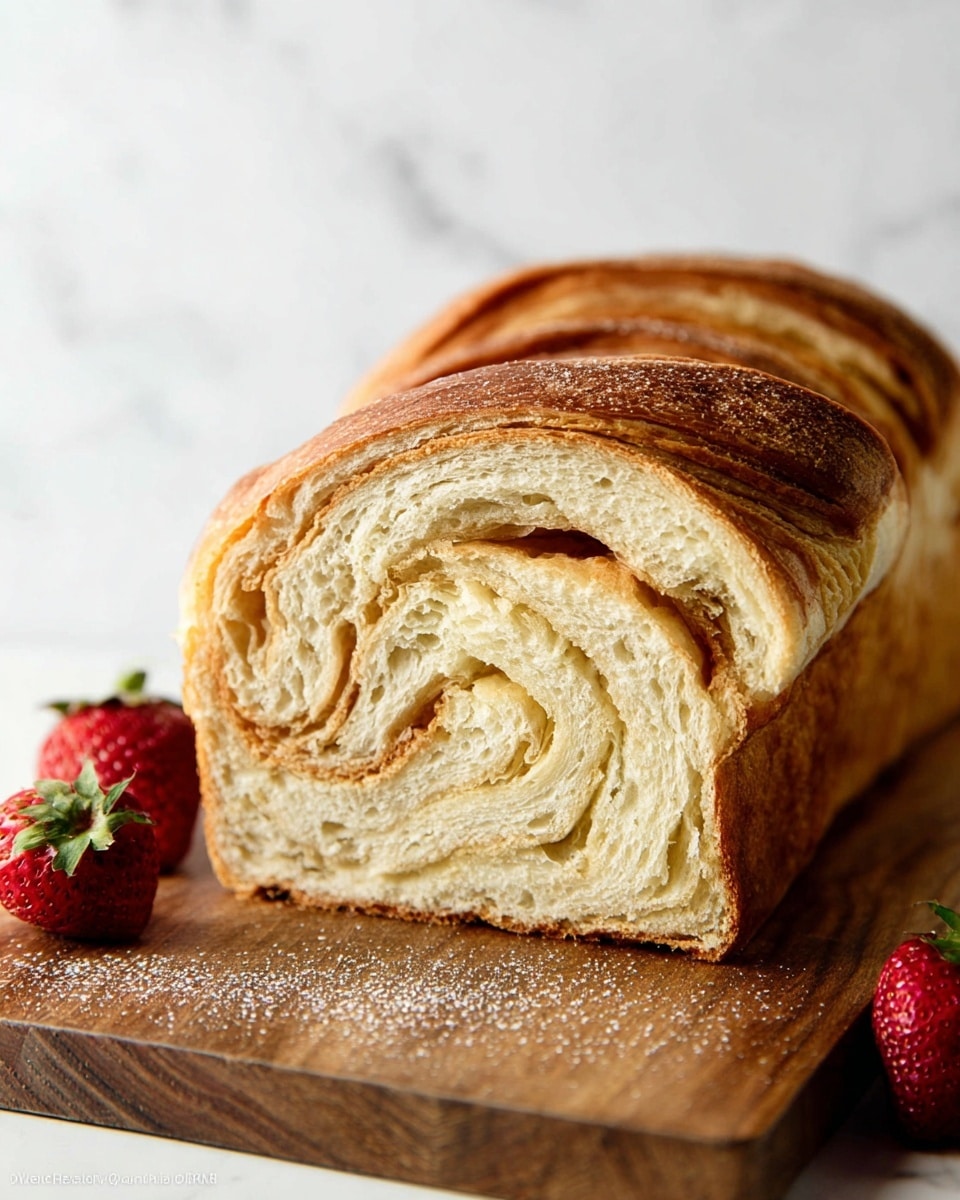
Croissant Bread is a buttery, flaky loaf that combines the rich layers of classic croissants with the convenience of sandwich bread. Perfect for breakfast or afternoon toast, this recipe offers a delicious twist on traditional bread baking.
Ingredients
- 1 cup (240ml) whole milk, warmed to about 110°F (43°C)
- 2 and 1/4 teaspoons (7g) instant or active dry yeast (1 standard packet)
- 3 Tablespoons (38g) granulated sugar
- 1 and 1/4 teaspoons salt
- 3 Tablespoons (43g) unsalted or salted butter, softened to room temperature and cut into 3 equal pieces
- 3 cups (375g) all-purpose flour (spooned & leveled), plus more as needed and for lamination
- 3/4 cup (12 Tbsp; 170g) salted butter, slightly softened
- 1 large egg, cold or room temperature
- 1 Tablespoon (15ml) water
Instructions
- Step 1: Whisk the warm milk, yeast, and sugar together in the bowl of your stand mixer fitted with a dough hook. Cover and let sit about 5 minutes until foamy.
- Step 2: Add salt, softened butter pieces, and 2 cups of flour. Mix on medium speed for 2 minutes, scraping down as needed. Then add remaining flour and mix on low until a soft dough forms that pulls away from the bowl sides. Add 2-3 more tablespoons of flour if dough is very sticky.
- Step 3: Knead the dough for 5 minutes using the mixer or by hand on a lightly floured surface until it is soft but elastic. The dough should pass the “windowpane test” or bounce back slowly when poked.
- Step 4: Lightly grease a large bowl and place the dough inside, turning to coat in oil. Cover and let rise in a warm spot for 1.5 to 2 hours until nearly doubled.
- Step 5: Punch down the dough and place it on a silicone mat or floured baking sheet. Gently flatten into a 10×14-inch rectangle. Cover and chill in the refrigerator for 20 minutes.
- Step 6: Slice the slightly softened salted butter into 1/4-inch thick pieces for lamination. Keep butter cool but pliable.
- Step 7: Remove dough from fridge. Spread butter down the center third of the dough lengthwise, fold dough edges over butter like a letter, sealing edges. Rotate dough, lightly flour, and roll out to 9×12 inches. Fold edges over again, cover, and chill 20 minutes.
- Step 8: Repeat the rolling and folding process two more times, chilling 20 minutes between each lamination. This creates the signature flaky layers.
- Step 9: For the final shaping, roll out dough to 9×12 inches, fold, then roll out again. Roll up the dough from a 9-inch side like a jelly roll and cut into 5 even rolls.
- Step 10: Grease a 9×5-inch loaf pan. Place rolls seam-side down inside. Cover tightly and allow to rise for 45–60 minutes until slightly puffy.
- Step 11: Preheat oven to 350°F (177°C). Whisk egg and water together, then brush the risen dough with this egg wash.
- Step 12: Bake for 1 hour, tenting with foil after 25 minutes to avoid over-browning. The loaf is done when an instant-read thermometer reaches 195°F (90°C) in the center.
- Step 13: Cool the loaf in the pan on a wire rack for 30 minutes. Run a knife around edges, remove from pan, and cool at least 15 more minutes before slicing.
Tips & Variations
- Use a silicone baking mat for rolling to prevent dough from sliding and sticking.
- Keep your butter slightly firm but pliable during lamination to create distinct layers without tearing the dough.
- If the dough resists rolling, let it rest for 5 minutes to relax the gluten before trying again.
- Make sure not to extend refrigeration times during laminations to avoid over-expansion of the dough.
Storage
Store leftover croissant bread covered at room temperature for up to 3 days or in the refrigerator for up to 1 week. Freeze for up to 3 months, then thaw on the counter or overnight in the refrigerator. Warm before serving to restore softness and flavor.
How to Serve

Serve this delicious recipe with your favorite sides.
FAQs
Can I use instant yeast instead of active dry yeast?
Yes, instant yeast can be used interchangeably with active dry yeast in this recipe. There’s no need to proof instant yeast; just mix it directly with the warm milk and sugar.
Why does the recipe require multiple refrigeration steps?
Refrigeration between laminations keeps the butter firm, preventing it from melting into the dough. This helps create the flaky, layered texture typical of croissant bread.
PrintCroissant Bread Loaf Recipe

This Croissant Bread Loaf recipe combines the buttery, flaky layers of traditional croissants into a convenient loaf form. Featuring a rich dough laminated with layers of salted butter, it’s perfect for slicing and enjoying as breakfast or a snack, with a soft interior and golden, tender crust.
- Prep Time: 30 minutes
- Cook Time: 1 hour
- Total Time: 5 hours
- Yield: 1 loaf (5 slices of croissant bread) 1x
- Category: Baking
- Method: Baking
- Cuisine: French-inspired
Ingredients
Dough Ingredients
- 1 cup (240ml) whole milk, warmed to about 110°F (43°C)
- 2 and 1/4 teaspoons (7g) instant or active dry yeast (1 standard packet)
- 3 Tablespoons (38g) granulated sugar
- 1 and 1/4 teaspoons salt
- 3 Tablespoons (43g) unsalted or salted butter, softened to room temperature and cut into 3 equal pieces
- 3 cups (375g) all-purpose flour (spooned & leveled), plus more as needed for dough and lamination
Lamination Butter
- 3/4 cup (12 Tbsp; 170g) salted butter, slightly softened
Egg Wash
- 1 large egg, cold or room temperature
- 1 Tablespoon (15ml) water
Instructions
- Preliminary Notes: Watch the video tutorial and refer to step-by-step photos before beginning. Make space in your refrigerator for a half baking sheet to be used in later steps.
- Prepare the Dough: In the bowl of a stand mixer fitted with a dough hook, whisk together the warm milk, yeast, and sugar. Cover and let sit about 5 minutes until foamy. If no mixer is available, mix by hand using a large spoon or spatula.
- Add Ingredients and Mix: Add salt, softened butter, and 2 cups (250g) of flour. Beat on medium speed 2 minutes, scraping the bowl as needed. Add remaining flour and beat on low until a soft dough forms, pulling away from the bowl sides. Add 2-3 tablespoons more flour if dough is too sticky but avoid excess.
- Knead the Dough: Continue kneading using the mixer for 5 more minutes or knead by hand on a floured surface for 5 minutes. If sticky, sprinkle small amounts of flour to maintain a soft, slightly tacky texture. Check dough readiness with the bounce-back poke test or windowpane test.
- First Rise: Lightly grease a large bowl and place dough inside, turning to coat. Cover with plastic wrap, foil, or towel. Let rise in a warm spot for 1.5–2 hours until nearly doubled in size.
- Flatten the Dough: Punch down dough to release air and place on a lined or floured baking sheet. Gently flatten to a 10×14-inch (25x35cm) rectangle. Cover and refrigerate for 20 minutes to rest.
- Prepare Butter for Lamination: Slice salted butter into 1/4-inch thick pieces, ensuring it is slightly softened but not too soft. Review lamination tips to handle air bubbles, tears, and dough firmness.
- First Lamination: Remove dough from refrigerator. Place butter slices down the center third of the dough. Fold edges over the butter like a letter and seal the ends. Rotate dough and roll to a 9×12-inch (23x30cm) rectangle. Fold like a letter again, cover, and refrigerate 20 minutes.
- Second and Third Laminations: Repeat the rolling and folding process twice more: roll dough to 9×12 inches, fold like a letter, rotate, and roll again. After each fold, cover and refrigerate for 20 minutes. Do not exceed refrigeration times to prevent over-expansion.
- Final Lamination and Shaping: After the final fold and roll to 9×12 inches, roll the dough from a 9-inch side into a tight log. Cut the log into 5 even rolls.
- Second Rise: Grease a 9×5-inch (23x13cm) loaf pan and place rolls seam side down inside. Cover tightly and let rise about 45–60 minutes until slightly puffy.
- Preheat Oven and Egg Wash: Preheat oven to 350°F (177°C). Whisk together the egg and water to make an egg wash.
- Bake the Loaf: Brush the risen loaf generously with egg wash. Bake for 1 hour until golden brown. Tent with foil after 25 minutes to prevent excessive browning. The bread is done when an instant-read thermometer registers 195°F (90°C) in the center.
- Cool the Bread: Remove from oven and place pan on a wire rack. Cool the loaf 30 minutes in the pan, then run a knife around edges, remove loaf, and cool an additional 15 minutes before slicing. Bread may deflate slightly as it cools.
- Storage: Store leftover bread covered at room temperature for up to 3 days, in the refrigerator up to 1 week, or freeze for up to 3 months. Thaw at room temperature or overnight in the refrigerator and warm before serving.
Notes
- The yeast can be instant or active dry; activate it with warm milk and sugar before mixing dough.
- Butter for lamination should be firm but pliable, not melted or overly soft, to maintain distinct layers.
- Use a silicone baking mat for rolling the dough to prevent sliding and ease handling.
- Do not extend refrigeration times during lamination steps, as it can cause over-expansion and difficulty working with the dough.
- The windowpane test is helpful to ensure adequate gluten development.
- Use an instant-read thermometer to confirm doneness; underbaked bread can be gummy inside.
- Bread should cool sufficiently before slicing to maintain structure and prevent crumbling.
Keywords: croissant bread, laminated dough, buttery bread loaf, breakfast bread, layered bread