
Curry d’hiver aux poireaux, carottes, oignons et pois chiches Recipe
Introduction
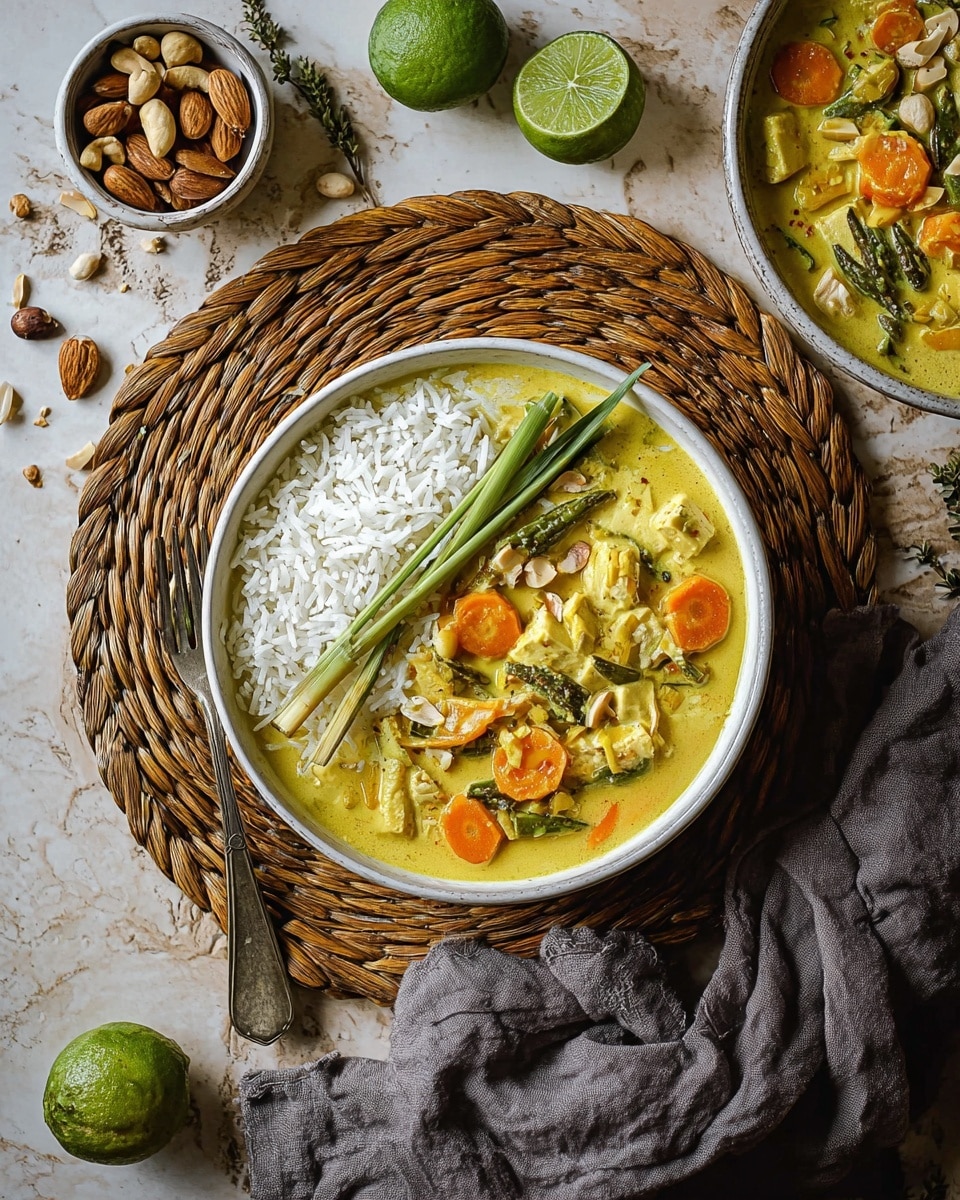
This winter curry combines the earthy flavors of leeks, carrots, onions, and chickpeas in a creamy coconut sauce spiced with warming aromatics. It’s a comforting, hearty dish perfect for chilly days and pairs wonderfully with rice or fresh herbs.
Ingredients
- 2 leeks
- 2 yellow onions
- 600 g carrots
- 2 tbsp neutral olive oil
- 5 cm fresh ginger
- 5 cardamom pods
- 265 g cooked chickpeas (about one medium can)
- 400 ml coconut cream
- 200 g crushed tomatoes
- 1.5 tsp ground cumin
- 1.5 tsp ground coriander
- 1.5 tsp turmeric
- 1 tsp ground cinnamon
- 1.5 tsp salt (adjust to taste)
- 3 garlic cloves
- Vegetable broth (as needed)
Instructions
- Step 1: Rinse the carrots and leeks thoroughly. Peel the onions and cut them into large slices.
- Step 2: Trim the leeks lengthwise if needed to clean them well, separating the leaves. Peel the carrots and slice them into rounds or half-moons about 0.5 cm thick, depending on size.
- Step 3: Place the vegetables in a large pot and cover with water. Cook over medium heat with gentle boiling for about 20 minutes until the vegetables are tender. For a richer vegetable broth, simmer for about 40 minutes until very soft and flavorful.
- Step 4: In a separate pot, heat the oil and add the spices. Toast the spices over medium heat just until they start to pop.
- Step 5: Drain the cooked vegetables and add them to the spiced oil, sautéing briefly. Then add the crushed tomatoes and coconut cream.
- Step 6: Stir well to coat the vegetables, then add enough water to cover everything and allow it to cook in the curry broth. Reduce heat to low.
- Step 7: Peel and crush the garlic cloves. For the ginger, crush just enough to release the juice without adding fibrous parts—if using whole, remember to remove it before serving.
- Step 8: Add the garlic and ginger to the pot, cover and simmer for 10 minutes. Then add the chickpeas and cook for another 10–15 minutes.
- Step 9: If the liquid is still thin, continue to simmer uncovered to reduce and concentrate the flavors. This curry benefits from slow, extended cooking.
- Step 10: Serve hot with rice, fresh coriander, or sliced fresh onion.
- Step 11: Leftovers reheat well on the stove, adding a splash of broth or water if needed. Reserve and reuse the leftover broth in soups, purees, or enjoy as a nourishing drink.
Tips & Variations
- Toast the spices gently to enhance their aroma but be careful not to burn them.
- Use fresh coconut cream if available for a richer texture and flavor.
- Swap chickpeas for white beans or lentils for a variation in texture.
- Adjust spices according to preference; increase chili or add fresh chili for heat.
Storage
Store leftover curry in an airtight container in the refrigerator for up to 3 days. Reheat gently on the stove, adding a little broth or water to loosen the sauce if it thickens. You can also freeze portions for up to 2 months; thaw overnight in the fridge before reheating.
How to Serve
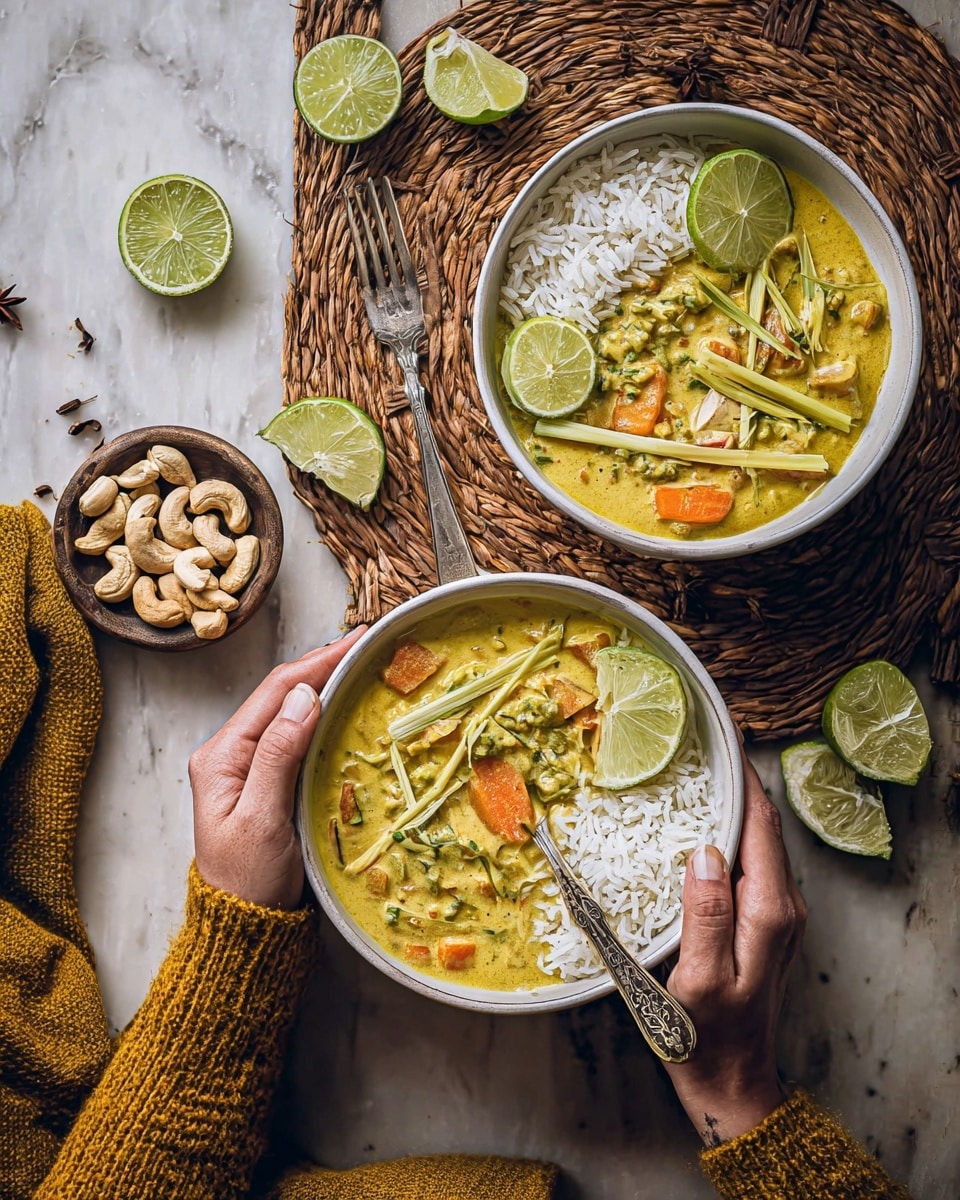
Serve this delicious recipe with your favorite sides.
FAQs
Can I use canned vegetables instead of fresh?
Fresh vegetables provide the best texture and flavor for this curry. However, you can substitute with canned or frozen vegetables; just reduce the initial cooking time accordingly to avoid overcooking.
Is this recipe suitable for vegans?
Yes, this curry is naturally vegan as it uses coconut cream instead of dairy and no animal products in the spices or broth.
PrintCurry d’hiver aux poireaux, carottes, oignons et pois chiches Recipe

Ce délicieux curry d’hiver aux poireaux, carottes, oignons et pois chiches est un plat mijoté réconfortant, riche en saveurs d’épices torréfiées et en douceur de crème de coco. Facile à préparer, il combine légumes tendres et légumineuses protéinées pour un repas complet, idéal pour les saisons froides.
- Prep Time: 20 minutes
- Cook Time: 50 minutes
- Total Time: 1 heure 10 minutes
- Yield: 4 portions 1x
- Category: Main Course
- Method: Stovetop
- Cuisine: Indienne
- Diet: Vegetarian
Ingredients
Légumes
- 2 poireaux
- 2 oignons jaunes
- 600 g de carottes
- 3 gousses d’ail
- 5 cm de gingembre frais
Épices et condiments
- 5 gousses de cardamome
- 1,5 c. à café de cumin moulu
- 1,5 c. à café de coriandre moulue
- 1,5 c. à café de curcuma
- 1 c. à café de cannelle en poudre
- 1,5 c. à café de sel (ajuster selon goût)
Autres ingrédients
- 2 c. à soupe d’huile d’olive neutre
- 265 g de pois chiches cuits (environ une boîte moyenne)
- 400 ml de crème de coco
- 200 g de concassé de tomates
- Bouillon de légumes (quantité suffisante pour couvrir les légumes)
Instructions
- Préparation des légumes : Rincez soigneusement les carottes et les poireaux. Épluchez les oignons et coupez-les en grosses lamelles. Coupez les poireaux dans la longueur si nécessaire pour bien les nettoyer et séparez les feuilles. Épluchez les carottes puis taillez-les en rondelles ou demi-rondelles d’environ un demi-centimètre d’épaisseur.
- Cuisson des légumes : Placez tous les légumes dans une grande cocotte avec de l’eau pour les couvrir. Faites cuire à feu moyen, avec une petite ébullition constante, pendant 20 minutes environ jusqu’à ce que les légumes soient tendres. Pour un bouillon riche, prolongez la cuisson jusqu’à 40 minutes pour des légumes très tendres et un liquide savoureux.
- Torréfaction des épices : Dans une autre cocotte, versez l’huile d’olive neutre et ajoutez les épices (cardamome, cumin, coriandre, curcuma, cannelle, sel). Faites-les crépiter à feu moyen pour les torréfier légèrement et libérer leurs arômes.
- Sauter les légumes : Égouttez les légumes cuits et ajoutez-les dans la cocotte avec les épices torréfiées. Faites rapidement revenir les légumes dans l’huile parfumée pour bien les enrober.
- Ajout des liquides : Incorporez le concassé de tomates puis la crème de coco. Mélangez soigneusement pour enrober tous les légumes. Ajoutez ensuite de l’eau pour recouvrir les légumes et permettre une cuisson en bouillon de curry. Réduisez le feu à doux.
- Préparation et ajout d’ail et gingembre : Épluchez l’ail et pressez les gousses. Pour le gingembre, pressez-le au presse-ail afin d’extraire le jus sans la partie filandreuse (vous pouvez aussi ajouter un morceau entier puis le retirer après infusion).
- Mijotage initial : Laissez mijoter le mélange à couvert pendant 10 minutes pour que les saveurs se mélangent et que les légumes s’imprègnent du bouillon.
- Ajout des pois chiches : Incorporez les pois chiches cuits dans la cocotte. Continuez à mijoter à feu doux encore 10 à 15 minutes pour bien chauffer les pois chiches et développer les saveurs.
- Réduction du liquide : Si le bouillon est trop liquide, laissez-le réduire davantage à feu doux. Ce curry supporte une cuisson longue pour concentrer les goûts.
- Service : Servez chaud, idéalement accompagné de riz, de coriandre fraîche ou d’oignon frais pour apporter de la fraîcheur.
- Conseils de réchauffage : Ce plat se réchauffe très bien à la casserole. Ajoutez un peu de bouillon ou d’eau en réchauffant si nécessaire. Ne jetez pas le bouillon restant : il peut être consommé tel quel, ou utilisé pour enrichir soupes et purées.
Notes
- Pour un curry plus épais, réduisez davantage le liquide avant de servir.
- Vous pouvez ajuster la quantité de sel selon votre goût et ajouter d’autres épices si désiré.
- L’utilisation du gingembre au presse-ail facilite l’intégration du jus tout en évitant la partie fibreuse.
- Ce curry est un excellent plat végétarien, riche en protéines grâce aux pois chiches.
- La recette peut être adaptée avec d’autres légumes racines selon la saison.
- Le bouillon de légumes fait maison intensifie encore plus le goût du plat.
Keywords: curry d’hiver, poireaux, carottes, pois chiches, curry végétarien, plat mijoté, cuisine indienne