Pastel de Nata (Portuguese Custard Tarts) Recipe
Introduction
Pastel de Nata are iconic Portuguese custard tarts with a crisp, flaky pastry and creamy, sweet filling. This recipe guides you through making these delightful treats at home, capturing the authentic flavors and textures of the classic dessert.

Ingredients
- 1 sheet frozen puff pastry, thawed
- Flour for dusting
- 3/4 cup (150g) granulated sugar
- 1/3 cup (40g) all-purpose flour
- 1 1/4 cups (300ml) whole milk
- 1 cinnamon stick
- Peel from 1 lemon (use a vegetable peeler to avoid the bitter white pith)
- 6 large egg yolks
- Ground cinnamon and powdered sugar for dusting (optional)
Instructions
- Step 1: Roll out the puff pastry on a lightly floured surface into a thin rectangle. Roll it up tightly from one short end to the other, like a jelly roll, then slice into 12 equal pieces.
- Step 2: Place each piece cut-side down into a muffin tin cup. Using your thumbs, press and stretch the dough evenly into the base and up the sides of the cups.
- Step 3: In a saucepan, whisk together the sugar, flour, and a small amount of the milk to form a smooth paste. Add the remaining milk, cinnamon stick, and lemon peel. Cook over medium heat, whisking constantly until it just starts to simmer and thicken.
- Step 4: Remove from heat and let the mixture steep for 10 minutes to develop flavor.
- Step 5: While the mixture steeps, whisk the egg yolks in a separate bowl. Remove the lemon peel and cinnamon stick from the milk mixture, then slowly whisk the warm milk into the egg yolks to temper them.
- Step 6: Strain the custard through a fine mesh sieve for a smooth filling and let it cool slightly.
- Step 7: Preheat your oven to 500°F (260°C) or as high as it safely goes.
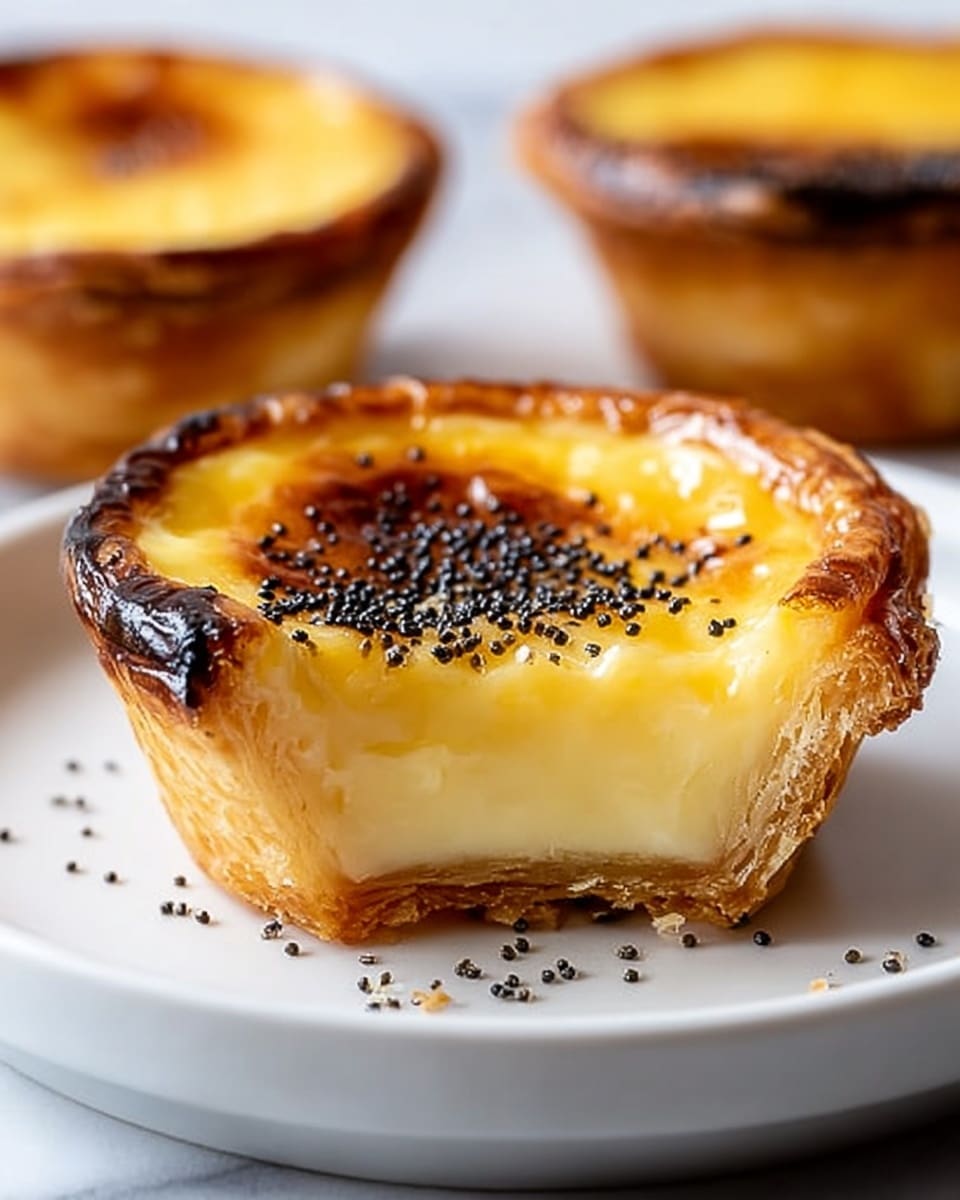
- Step 8: Pour the custard into the prepared pastry cups, filling each about 3/4 full. Bake for 12–15 minutes until the custard puffs and the tops blister and brown. Black spots are traditional and add character.
- Step 9: Let the tarts cool in the tin for 5 minutes, then transfer to a wire rack to cool slightly before serving.
Tips & Variations
- For extra flaky pastry, keep the dough and your hands cool while shaping the cups.
- If you prefer a milder citrus flavor, replace lemon peel with orange peel.
- Use a kitchen torch for extra caramelization on the custard tops if you want a brûlée effect.
- Dust with a little ground cinnamon or powdered sugar just before serving for a classic touch.
Storage
Store leftover tarts in an airtight container in the refrigerator for up to 2 days. Reheat gently in a warm oven (about 300°F / 150°C) for 5–7 minutes to revive the crisp pastry. Avoid microwaving as it can make the crust soggy.
How to Serve
Serve this delicious recipe with your favorite sides.
FAQs
Can I make pastel de nata without puff pastry?
Puff pastry is preferred for its flaky texture, but you can use shortcrust pastry for a denser tart. The texture and flavor will differ from the traditional version.
Why do pastel de nata have black spots on top?
Those characteristic black spots come from caramelization and slight charring during the high-temperature baking. They add flavor and are a sign of an authentic pastel de nata.
PrintPastel de Nata (Portuguese Custard Tarts) Recipe

Pastel de Nata, or Portuguese Custard Tarts, are delicate pastries featuring a crisp, flaky puff pastry shell filled with a creamy, lightly cinnamon-flavored custard. This recipe guides you through creating these iconic Portuguese treats from scratch, with a rich custard infused with lemon and cinnamon, baked to achieve characteristic caramelized, blistered tops.
- Prep Time: 25 minutes
- Cook Time: 15 minutes
- Total Time: 40 minutes
- Yield: 12 tarts 1x
- Category: Dessert
- Method: Baking
- Cuisine: Portuguese
Ingredients
Pastry
- 1 sheet frozen puff pastry, thawed
- Flour for dusting
Custard Filling
- 3/4 cup (150g) granulated sugar
- 1/3 cup (40g) all-purpose flour
- 1 1/4 cups (300ml) whole milk
- 1 cinnamon stick
- Peel from 1 lemon (use a vegetable peeler to avoid the bitter white pith)
- 6 large egg yolks
To Serve (Optional)
- Ground cinnamon for dusting
- Powdered sugar for dusting
Instructions
- Prepare the Pastry: Roll out the thawed puff pastry on a lightly floured surface into a thin rectangle. Then tightly roll it up from one short end to the other, akin to a jelly roll. Slice the rolled dough into 12 equal pieces.
- Form Pastry Cups: Place each piece cut-side down into the cups of a muffin tin. Press and stretch each piece gently with your thumbs to evenly line the base and sides, creating a pastry cup.
- Make the Custard Base: In a saucepan, whisk together sugar, flour, and a small amount of milk from the total milk to create a smooth paste. Add the remaining milk along with the cinnamon stick and lemon peel. Cook over medium heat while whisking constantly until the mixture starts to simmer and thickens slightly.
- Steep Flavors: Remove the saucepan from heat and allow the mixture to steep for 10 minutes so the cinnamon and lemon peel infuse the custard.
- Combine Egg Yolks and Warm Milk Mixture: While the custard base steeps, whisk the egg yolks in a separate bowl. Remove the lemon peel and cinnamon stick from the pot, then slowly whisk the warm milk mixture into the egg yolks to temper them.
- Strain Custard: Pass the custard through a fine mesh sieve to remove any lumps and create a smooth filling. Allow it to cool slightly.
- Preheat Oven: Preheat your oven to 500°F (260°C) or as high as your oven safely allows to achieve the traditional blistered tops.
- Fill Pastry Cups and Bake: Pour the custard into the prepared pastry cups about three-quarters full. Bake in the preheated oven for 12–15 minutes until the custard puffs and the tops begin to blister and brown with some characteristic black spots.
- Cool and Serve: Let the tarts cool in the muffin tin for 5 minutes before transferring them to a wire rack. Dust with ground cinnamon and powdered sugar if desired before serving.
Notes
- Use a vegetable peeler to remove only the colored part of the lemon peel, avoiding the bitter white pith.
- The high oven temperature is critical to achieve the traditional caramelized, blistered custard tops.
- Be careful not to overbake; the custard should be set but still creamy inside.
- Pastel de Nata is best enjoyed warm or at room temperature on the day they are baked.
Keywords: Pastel de Nata, Portuguese Custard Tarts, Puff Pastry, Custard Tarts, Portuguese Dessert, Traditional Portuguese Recipe